

In the past year, Black beauty brands took huge hits to profit impacting perceived and actualized longevity in the beauty business. With the ever-rising costs of tariffs, increases on manufacturing costs and MODs (minimum order quantities), and dismantling of DEI, Black owned beauty brands cannot catch a break.
The Lip Bar, suffered 30%-40% sales decline at major retail partner, Target, triggered by consumer boycotts as a result of President Trump’s roll back to DEI. Melissa Butler, CEO of The Lip Bar, intends to hire a co-owner and business partner to salvage her second brand, Thread Beauty, and diversify her customer base for The Lip Bar.
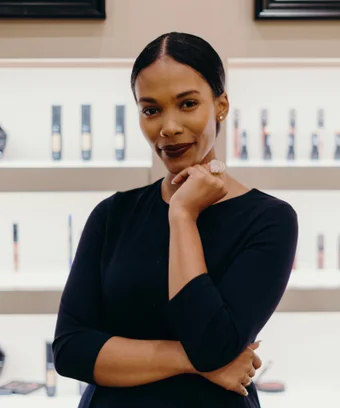
Vice President of Marketing at The Lip Bar, Yasmine Harema, has goals to expand beyond TLB’s core audience of Millennial Black women to help offset the recent drop off. This expansion aims to diversify customers and increase brand recognition in major retail outlets. In a recent Ad Week interview, Harema explains that the company is in a tough position having their largest retail partner, Target, at the center of an on-going and successful boycott.
Expanding the audience is not about abandoning the core audience, it is inviting a new audience to see themselves in products we know love and trust. At best, this is an opportunity for the brand to diversify while remain true to its core tenets of representing Black women. At worst, it is a sign that many Black consumers fear, representation abandonment in advertisement, quality and diversity.
Weariness and uncertainty about the decision to openly diversify, isn’t a product of unwarranted fodder. Over the past decade, the natural hair business saw multiple changing of the guard; products and representation went right with it. SheaMoisture weathered backlash in April 2017 for their “Break Free from Hair Hate” ad campaign. The ad featured little to zero Black women featured. Later, Mielle Organics faced a federal-class action lawsuit after being sold to Procter & Gamble, buyers claimed that products caused severe hair breakage, shedding, and scalp irritation.
Concerns about these events happening to TLB are within reason, for business’ sake, TLB has to do something. Within the past year, incredibly popular brands like Ami Cole permanently closed business September 2025 despite being sold at Sephora. This past spring, April 2026, legendary Pat McGrath exited chapter 11 bankruptcy with Pat McGrath Labs, after filing January 2026. PML was later acquired by investment firm GDA Luma, having 100% control though a Section 363 sale.
Frankly, the business of beauty is expensive and with the rapidly declining economic turn, Black owned business sits directly in a particularly tough spot. For centuries, Black beauty has been demonized, legalized, commodified, and exploited. When we see a successful brand that represents us, we feel emotionally connected to it by what it means for us. However, that emotionality is no match for public policy that forced nearly 1 million Black women out of the work force. What is a for-profit business to do when its core audience is out of work despite being their largest retailer holding the lion’s share their consumer sale?
Retailers actively analyze what SKUs are profitable, what products make margin and which products show continued growth. With 30% losses, retailers look at declining brands as future liabilities, pulled down sales and eventually turn into cutting receipts. Receipt cuts, retailers allocate less money to buy into brands’ inventory.
If TLB has high inventory and low sales turn over, their products can become non go forward within the next year. Target being their biggest retailer, would take hard work to bounce back without a bang. With no protected DEI incentive, Black owned brands at all major retailers are especially at risk for being shelved.
Black founders are not only expected build and scale successful brands; they are expected to do so with very little controversy, great manufacturing, and incredible customer service. Employees alike, brands are not so easily forgiven and financially supported by companies that believe in different missions. The solve is as challenging as the experience. What would you do if you were The Lip Bar? As always, I’d love to know what you think.


